 ID
ID
 EN
EN

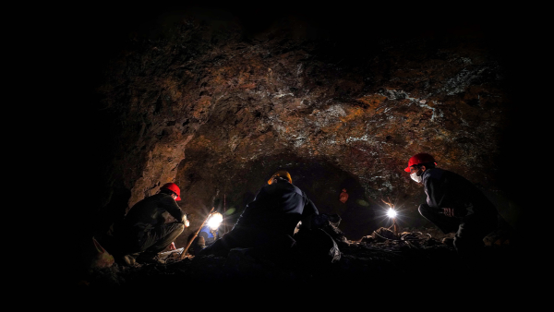
According to the World Bank's DELVE Initiative (2024), Artisanal and Small-Scale Mining (ASM) provides direct employment for approximately 45 million people globally, while supporting the livelihoods of an estimated 315 million people through direct and indirect economic activities (https://egps.worldbank.org/programs/asm). ASM is a major producer of gold, tin, cobalt, tantalum, gemstones, and other critical minerals that are increasingly essential for global industrial development and the energy transition.
Despite its socio-economic importance, ASM remains one of the world's most hazardous occupations, with workers frequently exposed to mine collapses, unstable excavations, hazardous chemicals such as mercury, silica dust, excessive physical workloads, inadequate personal protective equipment, and limited access to occupational health services. Strengthening Occupational Safety and Health (OSH) is therefore essential not only to protect workers' lives but also to improve productivity, reduce operational risks, and support the long-term sustainability of mining communities.
Recognising these challenges, the international community has developed a number of frameworks that place OSH at the centre of responsible mining. The ILO Safety and Health in Mines Convention, 1995 (No. 176) establishes internationally recognised principles for safe mining operations, while the ILO Code of Practice on Safety and Health in Opencast Mines and the ILO Handbook on Safety and Health in Small-Scale Surface Mines provide practical guidance on hazard identification, risk assessment, emergency preparedness, worker participation, and safe mining practices suitable for ASM. In parallel, the OECD Due Diligence Guidance for Responsible Mineral Supply Chains and other responsible sourcing initiatives increasingly recognise safe and healthy working conditions as a core element of responsible business conduct, human rights due diligence, and sustainable mineral supply chains.
In Indonesia, the importance of strengthening OSH in ASM has become increasingly relevant with the enactment of Law No. 2 of 2025, amending the Mineral and Coal Mining Law (UU Minerba). The law further reinforces the government's commitment to formalising community mining through People's Mining Areas (Wilayah Pertambangan Rakyat – WPR) and People's Mining Permits (Izin Pertambangan Rakyat – IPR). This policy creates an important opportunity for local communities, cooperatives, and small-scale miners to operate legally while improving governance, environmental management, and social performance. However, formalisation should not be viewed merely as a licensing process. It must also ensure that legal mining becomes safe mining, where miners have the knowledge, systems, and resources to identify hazards, manage occupational risks, respond to emergencies, and protect their health and wellbeing. Supported by Indonesia's broader legal framework—including Law No. 1 of 1970 on Occupational Safety, Government Regulation No. 96 of 2021, and regulations promoting Good Mining Practice (GMP)—OSH should become a fundamental pillar of Indonesia's ASM development.
Achieving this vision requires collaboration between government, mining cooperatives, local communities, industry, academia, and development partners. Beyond regulatory compliance, strengthening OSH in ASM demands practical solutions such as competency development, risk assessments, safer mining technologies, occupational health programmes, institutional strengthening, and the cultivation of a preventive safety culture that empowers miners to work safely every day.
As the Indonesian Centre for Labour and Occupational Safety and Health (ICLO), we are committed to supporting the transformation of Indonesia's ASM sector into one that is safer, healthier, and more sustainable. ICLO provides research and policy studies, OSH baseline assessments, workplace and mining risk assessments, competency-based training, institutional capacity building, and technical advisory services for governments, mining cooperatives, companies, and development organisations. By integrating international good practices with Indonesia's evolving regulatory framework, ICLO helps ensure that the implementation of WPR and IPR not only strengthens legal certainty but also promotes safer workplaces, protects miners' wellbeing, and advances responsible and sustainable artisanal and small-scale mining across Indonesia.